
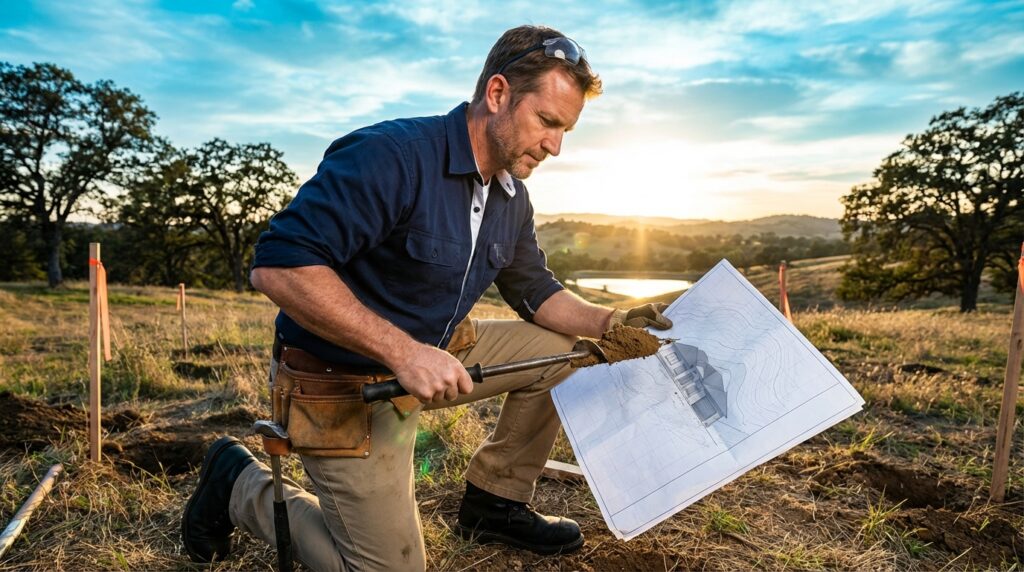
When you start to build a custom home, choosing the land (the lot) is hugely important. The plot you pick will greatly impact how your house is designed, how it’s laid out, and how easily it’s built. A good lot lets you combine the clever design of your house with the smart home technology you want, creating a beautiful and useful living space.
Lot Selection is basically the first big decision about the land you’re going to build on, and it determines what kind of custom home you’ll end up with. Whether or not your design is possible will depend a lot on three main things: the shape of the land (its topography), which way it faces (orientation), and local rules (zoning/regulations).
Topography includes how steep the land is, how high it is, and how stable the ground is. Knowing the natural shape of the land will help you decide what sort of foundations you need. Orientation involves thinking carefully about where the sun comes from, what you can see, and the usual direction of the wind. This impacts everything from how energy-efficient your home is, to where to place windows so you get the best natural light. Zoning and regulations are the local laws that say how far from the property lines you have to build (setbacks), where utilities are, and what part of the land you can actually build on. These regulations can really influence your design and your budget.
All of these things together affect how custom features, like smart technology in the kitchen or living room, are actually put in place and how well they both look and work.
The benefits of choosing a lot that works with your design go beyond just making things easier; they have a real, lasting positive effect.
You can save money if you choose your lot carefully. You could reduce the cost of getting the site ready by 10 to 20 percent of the entire building cost. Avoiding difficult ground – ground that needs a lot of leveling, has problems with utility connections, or needs a lot of complex engineering – can save you between $50,000 and $200,000. For a simpler building process, choose lots that don’t need much leveling and have utilities already available. This simplifies your spending and makes sure your smart home features can be installed without delays or issues (Greenwood Design Build).
Homes that are designed to fit the land’s shape and direction aren’t only attractive, they’re sensible. Being higher up can give you wonderful views, and a carefully planned layout can easily connect the inside with the outside for a modern lifestyle. However, if a sloping site isn’t properly considered, design costs can go up as much as 25%. Picking a good lot provides a base for design decisions that will make it less likely you’ll need major redesigns later on.
And finally, good lots actually increase your home’s value. Properties on particularly good sites – with amazing views or in a fantastic location – generally keep a higher price per square foot when you sell. Choosing your land carefully can really pay off financially if you later sell.
Choosing the Right Land for a Custom Home:
Picking the perfect piece of land needs to be done carefully, in stages. Here’s how to go about it:
- *Check the Shape of the Land: Get a land surveyor to look at how the land slopes, the soil, and any height issues that might affect your plans.
- How Does the Sun Hit It?: At different times of the day, stand on the land and see how the sun moves. Think about how the changing sunlight will affect both inside and outside your house.
- What Does the Area Say You Can Do?: Work with a local builder who knows the zoning rules. Find out how far back from the edges of the land you need to build (setbacks), and how you’ll get things like water, electricity, and gas, before you buy.
- What’s Happening Around It?: Imagine how the area will develop. Land in a neighborhood that’s just getting going is likely to increase in value more than land in an older, established area.
Usual Problems
Hiring a custom home builder is exciting, but there are plenty of things that can go wrong:
- Not Thinking About Hills: If you don’t check the slope of the land, you could have unexpected costs. The fix? Have a professional do a complete assessment of the land beforehand.
- Zoning Oversights: A lot might seem perfect until you learn zoning rules won’t allow your design. The answer: Thoroughly research the local rules before committing to the land.
- Not Considering How the House Will Use Energy: Land that doesn’t face the right way won’t work well with energy-saving designs. Solution: From the start, base your choices on the sun and wind.
Frequently Asked Questions
- What’s the first thing to do when choosing land for a custom home? Start by deciding how much you can spend and what you want in your home. That will narrow down your options for land.
- How does the direction the land faces change my home’s design? Which way the land faces affects how much you’ll need to heat and cool the house and how much natural light you’ll have – all important for a comfortable living space.
- What zoning rules should I be aware of? Yes, they vary depending on where you are and can affect how far back you must build, how tall the house can be, and how you’ll get utilities. Check the local rules.
- Can you build a modern house on sloping land? Definitely! If you make the right changes to the design, sloping land can lead to amazing architecture and a unique layout.
- What are some good ‘smart’ features for a custom home?* Think about lights that save energy, good home security, a smart thermostat, and appliances that work automatically.
To Finish
Basically, choosing the correct land is the starting point for your custom home, and influences not only what it looks like, but also how much it will be worth and how well it will work for you over time. If you make careful, informed choices based on the land’s shape, how it faces and the zoning rules, you can cleverly include smart home features in your design. Now that you have a plan for selecting land, think about how big the best plot for your smart home will be. Good luck with your building!